Built on the most beautiful balcony of Mount Vermio—described by Herodotus as an inaccessible mountain in winter—the city of Naoussa, along with its small and large villages across the mountain and the plain, is today the second largest municipality in Imathia. The city is crossed by the rushing waters of the Arapitsa River, to which it owes its lush vegetation, the operation of numerous factories, and the irrigation of its fruitful trees and vineyards.
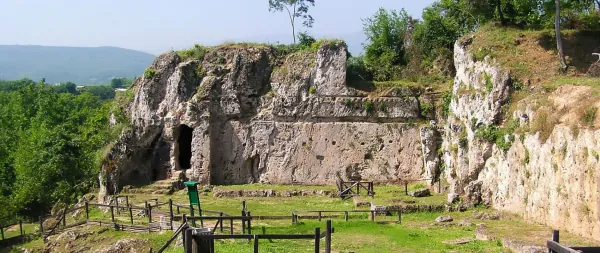
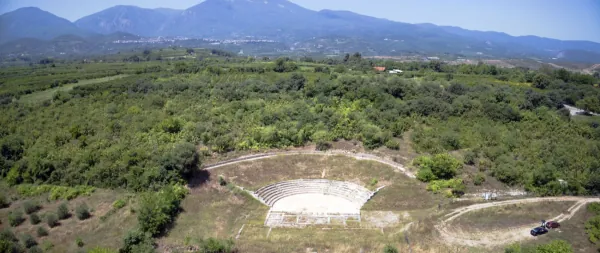
In this area, the ancient city of Mieza developed, with its now renowned tomb monuments. At the Nymphaeum of Mieza operated the School of Aristotle, where Alexander found his teacher… before their paths diverged, with Aristotle reaching the highest levels of knowledge and Alexander conquering almost the entire known world. In the center of Naoussa still stands, between myth and history, the “Crooked Plane Tree,” a living witness to the foundation of the city during the Ottoman period.
In the waters of the Arapitsa were written moments of unmatched heroism and self-sacrifice during the Revolution. Half a century later, these same waters powered the first textile factory in Ottoman Macedonia, marking a period of industrial innovation for the city and all of Northern Greece. Within the mansions of Naoussa, military operations of the Macedonian Struggle in Mount Vermio and the Giannitsa marsh were planned. From this region, for centuries, one of Greece’s finest red wines has been exported worldwide: Naoussa’s Xinomavro.
With a history rooted in the early days of the Macedonian kingdom, blessed by nature, renowned for its wine and agricultural production, pioneering in industrial development, and celebrated for its struggles for freedom, Naoussa now counts six centuries of life, continuously blending the old with the modern. Although its old factories now stand inactive, they are gradually being given new uses.
Building on the excellence of its high-quality agricultural products, the new dynamic generation of winemakers, and the long-standing culture and aesthetic of its people, Naoussa invites you to discover what Alexander himself learned from Aristotle in this very place more than two millennia ago: the art of “living well.”